How to Choose Receptacle Switches in 2026?

Time:2026-10-02 Author:Isabella
0%

Choosing Receptacle Switches in 2026 requires more than comparing finishes and prices. The right device must match the circuit, installation environment, and expected daily use. A kitchen outlet near a coffee maker faces different demands than a bedroom receptacle. Small details matter.

Look for clear ratings, durable terminals, compatible wiring, and recognized safety certification. Check whether the product supports the required voltage, amperage, grounding method, and box depth. Smart models also need reliable connectivity and practical app support. A beautiful interface is not enough. I have seen installations fail because a switch fit the wall but not the existing wiring. That mistake can create heat, nuisance tripping, or expensive replacement work.

Regional electrical codes and certification requirements may change, so product documentation should be reviewed before purchase. When wiring conditions are uncertain, a licensed electrician can verify compatibility and installation safety. Manufacturer instructions remain essential, even for experienced installers. Receptacle Switches should also be tested after installation, including grounding, polarity, and device operation. Do not assume every modern feature improves safety. Some features add complexity without helping the actual room. Consider moisture, impact, cleaning routines, child access, and future maintenance. A dependable choice may look ordinary. That is often acceptable.

This guide compares the practical factors behind today’s options, including materials, controls, protection features, energy monitoring, and long-term value. It also questions popular assumptions. The cheapest product may cost more later, while the most advanced model may be unnecessary. Good selection is careful, evidence-based, and suited to the people using the space.
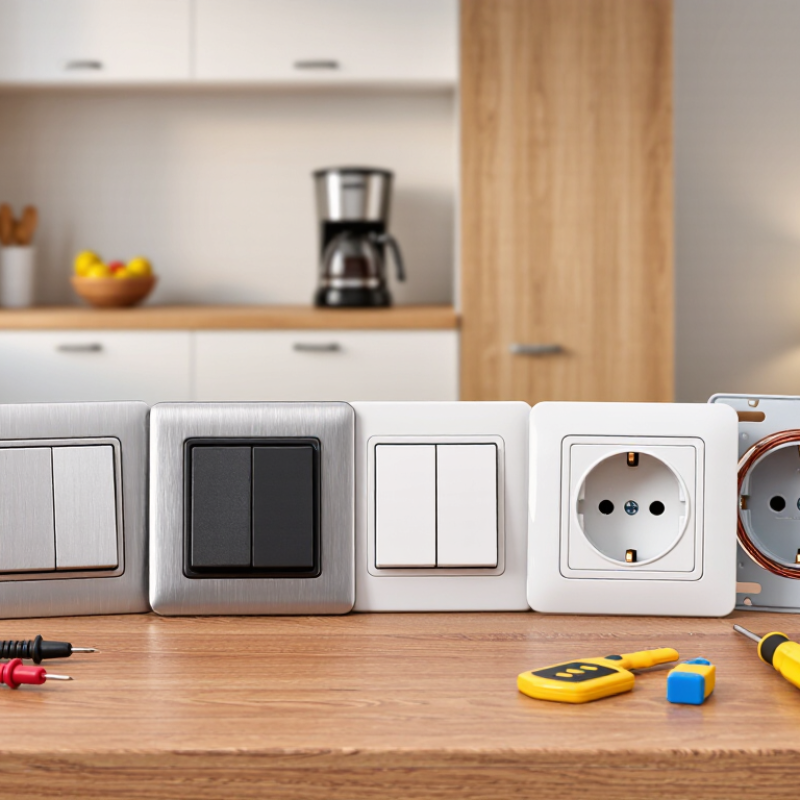
How to Choose Receptacle Switches in 2026?

Understand Receptacle Switch Types and Their 2026 Applications

How to Choose Receptacle Switches in 2026?

Receptacle switches combine power delivery and control in one wall device. Their main types include switched receptacles, combination switch-receptacles, GFCI receptacles, and tamper-resistant models. Each type serves a different risk or convenience need. A switched receptacle works well for lamps, while a combination unit controls a nearby light or fan. GFCI protection suits bathrooms, kitchens, garages, and outdoor areas where moisture may be present. Tamper-resistant designs help prevent children from inserting objects into unused slots.

Application should guide the choice, not appearance alone. In a home office, a switched outlet can control task lighting without reaching behind furniture. In a workshop, the device must match the tool’s voltage, amperage, and starting load. Smart-ready installations may use occupancy sensors or energy monitoring, but compatibility requires careful checking. Wireless control is useful. It is not always necessary.

Read the device rating and installation instructions before purchase. Confirm the circuit’s wiring, grounding, box depth, and protection requirements. Local electrical rules may require specific receptacle types or professional installation. A certified electrician can verify these details, especially in older buildings. One detail is easy to miss: a higher-looking rating does not make every load safe. A neat installation can still be unsuitable. Recheck the intended appliance, location, and expected daily use before choosing.

Match Voltage, Amperage, Wiring, and Load Requirements

How to Choose Receptacle Switches in 2026?

Match the device to voltage, amperage, wiring, and load type. A 120-volt circuit needs a device rated for 120 volts or higher. Its ampere rating must also suit the connected load. For a continuous load, NEC 210.20(A) generally requires conductors and overcurrent protection sized at 125 percent of the load.

Check the wire before selecting the receptacle or switch. A 20-amp circuit does not automatically justify every 20-amp device. Confirm conductor size, terminal compatibility, grounding, and the breaker rating.

Motor loads, heaters, and LED drivers can create starting or inrush currents. Their switching ratings may differ from ordinary lighting loads.

I have seen installations fail because the steady load looked harmless. The startup demand was missed.

NFPA’s Home Structure Fires report for 2016–2020 found electrical distribution and lighting equipment involved in 13 percent of reported home fires. It also linked this equipment to 15 percent of home fire deaths. That data makes small rating details important.

For kitchens, garages, bathrooms, and outdoor areas, check required GFCI protection. Bedrooms and many living areas may require AFCI protection under the applicable code edition.

The NEC is a useful baseline, but local amendments still matter. A qualified electrician should verify unusual loads, mixed wiring, and older panels.

Mistakes happen. Recheck the label.

Compare Smart Features, Energy Control, and Device Compatibility

How to Choose Receptacle Switches in 2026?

Smart features matter, but useful control starts with the wiring behind the wall. Check whether the switch needs a neutral wire, supports your circuit voltage, and matches the load rating. A device rated for lighting may not safely control a motor, heater, or high-draw appliance. Look for scheduling, remote control, voice integration, occupancy sensing, and local manual operation. Local control still matters when the internet fails.

Tips: Before buying, photograph the existing wiring and measure the wall box depth. Confirm compatibility with your home platform, wireless network, and preferred control method. Standard protocols can improve flexibility, but not every device supports every feature. Read the installation guide, not only the product page.

Energy control deserves equal attention. Scheduling can reduce standby use, while energy monitoring can reveal an appliance that quietly consumes power overnight. Some switches offer automatic shutoff, sunrise-based timing, or occupancy rules. These features sound impressive, yet complicated automation may create more frustration than savings. Test one room first. Keep a manual override available. Compatibility is often the overlooked issue; a switch may connect successfully but lose advanced functions across different systems. Certified electrical products and professional installation help reduce heat, loose connections, and unreliable operation. I would still recheck the circuit after installation, because small wiring assumptions can become expensive mistakes.

Verify Safety Standards, Accessibility, Durability, and Installation Needs

How to Choose Receptacle Switches in 2026?

A receptacle switch should match the room, electrical system, and user needs. Start by checking applicable safety standards and local electrical codes. Look for recognized certification marks from approved testing bodies. Confirm the voltage, amperage, grounding method, and environmental rating before purchase. Local requirements can differ, even between nearby areas. Do not rely only on appearance. An electrician or qualified inspector can identify hidden compatibility problems.

Accessibility deserves equal attention. Choose controls that are easy to see, reach, and operate without excessive force. Install them at a practical height, especially in kitchens, workshops, and shared spaces. Consider users with limited hand strength or reduced vision. A broad, clear actuator may be safer than a small, stiff control. Tactile feedback helps too. Small details matter.

Durability depends on more than a strong faceplate. Busy rooms need switches rated for frequent operation. Damp locations require suitable moisture protection and careful placement. During installation, terminals should be tightened correctly, wires should remain secure, and the wall box should not be overcrowded. I once saw a loose connection cause heat discoloration after months of use. That mistake was avoidable. Still, I would not assume every installation problem comes from the switch. Testing should include polarity, grounding, secure mounting, and smooth operation before regular use.

How to Choose Receptacle Switches in 2026? — Verify Safety Standards, Accessibility, Durability, and Installation Needs
Evaluation Dimension What to Verify Relevant Requirement or Practical Benchmark Recommended Selection Approach Priority
Safety and Code Compliance
Product certification Check the device label, certification mark, voltage rating, current rating, and intended application. Receptacles are commonly evaluated under UL 498, while snap switches are commonly evaluated under UL 20. Local authorities may require additional approvals. Use a device with a certification applicable to its function and installation environment. Confirm acceptance with the local authority having jurisdiction. High
Grounding and polarity Verify a grounding terminal, correct hot-neutral-ground identification, and compatibility with the branch-circuit wiring method. Grounding and conductor connections must comply with the applicable electrical code. A switch should not interrupt the equipment grounding conductor. Select a grounded receptacle-switch configuration when an equipment grounding conductor is required, and have connections tested after installation. High
GFCI protection Determine whether the installation is in a location where ground-fault protection is required. Common requirements include areas near sinks, bathrooms, garages, unfinished basements, outdoor locations, and other damp or wet areas; exact requirements depend on the adopted code. Use GFCI protection at the receptacle or upstream in the circuit where required. Do not treat a standard receptacle-switch device as a substitute for GFCI protection. High
Tamper resistance Consider whether children may access the receptacle and whether the location falls under tamper-resistant requirements. Many dwelling-unit receptacle locations require tamper-resistant receptacles under modern electrical codes, including NEC 406.12 in applicable jurisdictions. Choose tamper-resistant outlets for homes, childcare areas, and other spaces where unintended insertion of objects is a foreseeable risk. High
Wet and damp locations Check the device rating, enclosure, cover, and sealing requirements for the installation location. Outdoor and wet-location installations generally require weather-resistant components and an appropriate weatherproof cover. NEC 406.9 contains commonly referenced provisions for receptacles in damp or wet locations. Use weather-resistant construction and an in-use cover where required. Do not install an indoor-only device in an exposed location. High
Accessibility and User Operation
Mounting height Measure the finished-floor height and confirm that the switch and receptacle can be reached without excessive bending or stretching. For many accessible installations, the ADA Standards use a forward-reach range of 15 to 48 inches above the finished floor when the reach is unobstructed. State and local rules may differ. Coordinate mounting height with accessibility requirements, cabinetry, countertops, furniture, and the intended user population. High
Operating force and control style Evaluate the force, grip, dexterity, and motion needed to operate the switch. Large paddles and clearly differentiated controls are generally easier to operate than small knobs or controls requiring tight grasping and twisting. Choose a broad, easy-to-press actuator for high-traffic, public, healthcare, and accessibility-focused spaces. Medium
Visibility and identification Check contrast, labeling, status indication, and visibility in low-light conditions. Clear face markings and contrasting colors improve identification, but indicator lights should not create unwanted glare or confusion. Use high-contrast plates or labels where multiple controls are grouped together, and select illuminated indicators only when their status information is useful. Medium
Durability and Performance
Current and voltage rating Match the device rating to the circuit and connected load, including motor, lighting, heating, or electronic loads. Typical residential devices are available in 15 A or 20 A configurations at commonly used branch-circuit voltages, but the circuit rating and device configuration must be compatible. Never select by appearance alone. Confirm the branch-circuit rating, conductor size, load type, and device rating before purchase. High
Mechanical endurance Review the published switching or insertion-cycle rating and assess expected daily use. High-traffic locations require stronger mechanisms and terminals than lightly used residential rooms. Choose a higher-endurance construction for corridors, classrooms, workshops, kitchens, and commercial spaces where frequent operation is expected. Medium
Material and environmental resistance Consider impact, abrasion, chemicals, humidity, ultraviolet exposure, dust, and temperature. Polycarbonate and other engineered materials can provide improved impact resistance, while metal plates may offer a different balance of rigidity, appearance, and corrosion resistance. Select the face material and enclosure for the environment rather than choosing solely by color or finish. Medium
Terminal and connection quality Check terminal type, wire range, torque instructions, back-wire features, and compatibility with solid or stranded conductors. Loose or improperly torqued connections can cause overheating and premature failure. Installation instructions should specify the required torque where applicable. Prefer clearly marked terminals and use a torque-controlled installation method when the manufacturer specifies a torque value. High
Installation and Compatibility
Box depth and box fill Measure the electrical box depth, conductor count, cable size, grounding conductors, clamps, and device volume. NEC 314.16 provides box-fill calculation rules in jurisdictions using the NEC. A combination device may occupy more box space than a single-function device. Verify box-fill capacity before installation and use a deeper box or approved extension when necessary. High
Wiring configuration Identify line, load, neutral, switched leg, traveler, grounding conductor, and any multi-wire branch-circuit arrangement. Some switch functions require a neutral conductor, while others can operate without one. Existing wiring must match the device wiring diagram. Inspect the wiring before selecting the device. Do not assume that a neutral conductor is present in every switch box. High
Device orientation and plate fit Confirm whether the device is designed for horizontal or vertical mounting and whether the wall plate matches the device geometry. Combination devices and specialty receptacles may require a specific plate opening and orientation. Purchase the compatible plate at the same time and check alignment with adjacent devices before final tightening. Medium
Maintenance and replacement Assess access for testing, cleaning, inspection, and future replacement. Devices in high-use or critical locations benefit from clear labeling and readily available replacement specifications. Record the device function, rating, and circuit identification in the maintenance documentation. Low
Final Selection Checklist
Application fit Confirm location type, user needs, load type, environmental exposure, and expected usage. A suitable device must satisfy safety, accessibility, durability, and installation requirements simultaneously. Reject any option that fails a mandatory safety or code requirement, even if it has a lower price or more attractive appearance. High
Important: Electrical requirements vary by country, state, municipality, building type, and adopted code edition. Always verify the requirements in force at the installation location and use a qualified electrician for circuit modifications or unfamiliar wiring.

Select, Install, Test, and Maintain the Right Receptacle Switch

How to Choose Receptacle Switches in 2026?

Select, Install, Test, and Maintain the Right Receptacle Switch

Choosing a receptacle switch starts with the circuit, not the room’s appearance. Confirm voltage, amperage, wire size, grounding, and box depth before purchase. A 15-amp circuit generally needs a compatible 15-amp device, while a 20-amp circuit requires careful matching. Kitchens, bathrooms, garages, and outdoor areas may need GFCI protection. Tamper-resistant receptacles also improve safety where children may be present.

NFPA reported an estimated 35,150 home fires involving electrical distribution and lighting equipment each year from 2015 to 2019. These fires caused about 470 civilian deaths and 1,100 injuries annually. The numbers make small installation decisions important.

Turn off the breaker, then verify the circuit is de-energized with a tested meter. Secure every terminal firmly, but avoid crushing conductors. Keep the grounding path continuous. A loose connection can create heat behind the wall. That is easy to miss. After installation, test polarity, grounding, and switch operation.

Press the GFCI test button and confirm power disconnects, following the Consumer Product Safety Commission’s monthly testing guidance. Record the test date in a maintenance log.

Inspect for warmth, discoloration, buzzing, cracked covers, or loose plugs. Replace damaged devices promptly.

I would not rely on a successful reset alone; a device can appear normal while wiring remains poor. When circuit conditions are uncertain, consult a qualified electrician and follow the applicable electrical code.

FAQS

How do I match a receptacle switch to a circuit?

Check voltage, amperage, wire size, grounding, and breaker rating. A 120-volt circuit needs a device rated for 120 volts or higher. The numbers must agree.

Does a 20-amp circuit accept any 20-amp device?

No. Confirm conductor size, terminal compatibility, grounding, and box depth. The circuit rating alone does not prove compatibility. Recheck the label.

How should continuous loads be evaluated?

Continuous loads may require conductors and protection sized at 125 percent of the load. Heating equipment and long-running devices need careful review. Guessing is risky.

Why do motors, heaters, and LED drivers need special attention?

They can draw higher starting or inrush current. Their switching ratings may differ from ordinary lighting loads. A small steady load can still start harshly.

Where might extra protection be required?

Kitchens, bathrooms, garages, and outdoor areas may need ground-fault protection. Bedrooms and living areas may need arc-fault protection. Local rules can differ.

What accessibility features should I consider?

Choose controls that are easy to see, reach, and operate. A broad actuator helps users with limited hand strength. Tactile feedback can improve confidence.

How can I install the device safely?

Turn off the breaker and verify the circuit with a tested meter. Tighten terminals firmly without crushing wires. Keep the grounding path continuous. Never trust the switch position alone.

What should I test after installation?

Test polarity, grounding, secure mounting, and smooth operation. Press the protection test button and confirm power disconnects. Record the test date. A reset alone proves little.

Which warning signs mean replacement or inspection is needed?

Watch for warmth, discoloration, buzzing, cracked covers, loose plugs, or a crowded box. Stop using damaged devices promptly. Hidden wiring may still be poor. I might miss something without proper testing.

Conclusion

Choosing the right Receptacle Switches in 2026 requires more than comparing appearance or price. Start by understanding the available switch and receptacle types, then match each option to the intended application. Check voltage, amperage, wiring configuration, circuit capacity, and load requirements to support reliable performance. For modern spaces, consider smart controls, energy monitoring, scheduling, remote operation, and compatibility with connected devices and home automation systems.

Safety and practicality are equally important. Verify compliance with applicable electrical standards, grounding and protection features, accessibility requirements, environmental ratings, and expected durability. Installation should suit the existing wiring and location, while professional assistance may be appropriate when circuit changes are necessary. After selecting and installing the correct unit, test its operation, confirm secure connections, and inspect it periodically for heat, damage, looseness, or unusual performance. A well-planned choice balances function, safety, convenience, and long-term maintenance needs.


Isabella

Isabella

Isabella is a dedicated marketing professional with a sharp focus on driving brand growth and engagement through strategic content creation. With an extensive background in digital marketing, she combines her passion for storytelling with her keen understanding of industry trends to deliver......