When it comes to modern home solutions, a Wall USB Outlet stands out as a practical choice. Industry expert Alex Rivera, an electrical engineer with over a decade of experience, states, "The right USB outlet can enhance convenience and efficiency in any space."
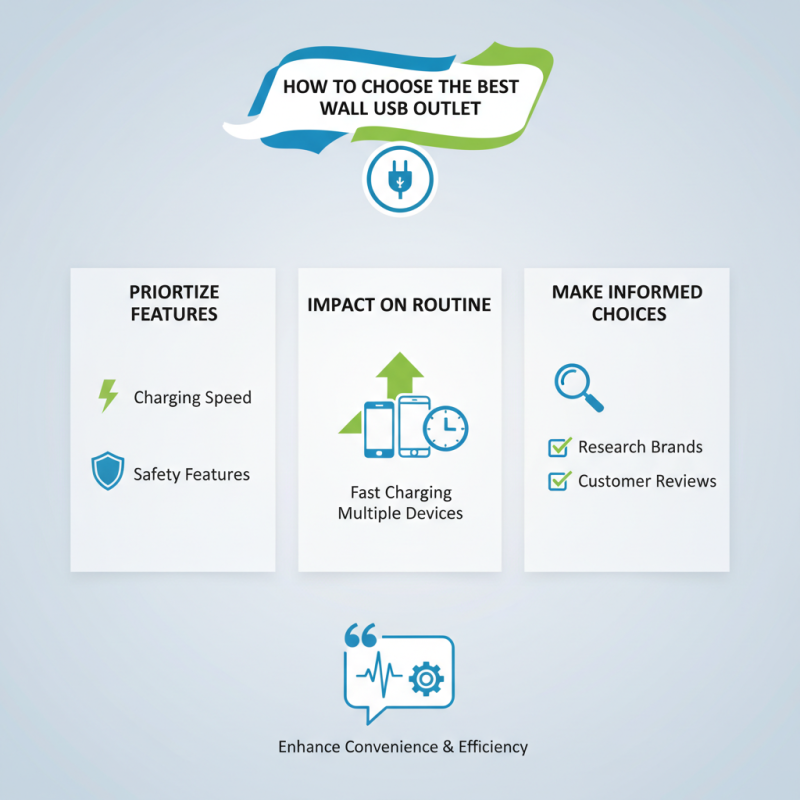
Selecting the best Wall USB Outlet isn't always straightforward. With so many options, you may wonder which features matter most. Should you prioritize charging speed or additional safety features? The choice can significantly impact your daily routine. For instance, outlets with fast charging capabilities can quickly power multiple devices.
However, not all Wall USB Outlets are created equal. Some may fail to deliver on their promises, leading to frustration. It's crucial to research and find reputable brands backed by customer reviews. This diligence ensures a reliable product that meets your needs.
Wall USB outlets have become increasingly popular for their convenience and functionality. They enable you to charge devices directly without needing bulky adapters. Understanding their features can help you decide which outlet fits your needs best.
One significant feature is the power rating. Most USB outlets provide fast charging, suitable for smartphones and tablets. Some even include multiple ports, allowing for simultaneous charging of several devices. Look for outlets with smart technology that identifies your device and adjusts the power accordingly. However, it’s essential to check compatibility, as some devices may not support fast charging.
Another aspect to consider is safety. High-quality USB outlets come with built-in protections against overcurrent and short circuits. These features ensure that charging remains efficient and safe. Also, consider the installation process. Some outlets are easier to install than others. Always review user manuals and installation guides to avoid potential issues. It’s crucial to prioritize safety and reliability when selecting the right wall USB outlet for your home.
| Feature | Description | Benefits |
|---|---|---|
| USB Ports | Various types (USB-A, USB-C) | Allows charging of multiple devices simultaneously |
| Amp Rating | Usually 2.1A or 3.1A | Faster charging for devices |
| Surge Protection | Built-in surge protection | Protects devices from voltage spikes |
| Design | Low profile or decorative options | Blends with modern home decor |
| Compatibility | Works with various devices (smartphones, tablets) | Universal charging solution |
When selecting a wall USB outlet, understanding the various types is essential. Wall USB outlets are designed for convenience. They come in different configurations, including single and dual ports. According to a recent report by the National Electrical Manufacturers Association, over 65% of households are now using these outlets.
The two main types are standard and fast-charging outlets. Standard outlets provide 5V, suitable for most smartphones and tablets. Fast-charging models can deliver up to 12V, reducing charging time significantly. A study by the Consumer Electronics Association showed that consumers prefer fast-charging solutions, especially for high-capacity devices.
Another consideration is USB Type-C versus Type-A ports. Type-C is becoming the industry standard due to its versatility. It allows for faster data transfer and charging. However, there is still a significant base of devices that rely on Type-A. Some users are frustrated when their older devices won't fit into newer outlets. Balancing compatibility and efficiency is crucial when making a choice.
When choosing a wall USB outlet, several key factors come into play. First, assess the charging speed you need. According to a recent industry report, most outlets offer 2.1A or 2.4A charging options. Higher amperage supports quicker charging, especially for high-demand devices like tablets. Your choice should cater to daily usage patterns to ensure efficiency.
Safety features are also crucial. Look for built-in surge protection and short-circuit prevention. Research indicates that over 30% of electronic device failures stem from poor charging practices. An outlet with solid safety ratings can mitigate risks.
Compatibility is another vital element. Not all USB outlets support the same standards. Consider USB-C outlets if you have newer devices. However, some users may find older devices incompatible. Evaluate your current and future needs. Balancing these factors can enhance your charging experience while safeguarding your devices.
When installing a new wall USB outlet, proper preparation is key. Start by turning off the power at the circuit breaker to ensure safety. According to the National Electrical Code, proper grounding and circuit protection are essential. This means you will need a GFCI outlet in wet locations. Take time to select the right location for your outlet. A position near furniture makes it convenient for charging devices.
Mounting the outlet can be straightforward if you follow certain steps. Use a stud finder to locate the best area on the wall. Drill pilot holes to avoid damaging the wall. Be mindful that an average household in the U.S. has about 10 USB devices, based on a 2022 consumer electronics report. Hence, you'll want to consider outlets with multiple ports. Ensure the wiring is connected securely to accommodate the load.
Testing the outlet after installation is crucial. A quick check with a voltage tester can prevent future issues. Many users overlook this step; it could save you time and money. Regular testing for any signs of malfunction can enhance longevity. Remember, attention to detail during installation leads to a seamless charging experience.
When using wall USB outlets, safety should be your top priority. Many outlets have built-in safety features like surge protection. This can help prevent damage during power surges. Make sure the outlet is tested and certified by reliable safety organizations. Check for the UL mark, indicating it meets safety standards. Using non-certified products can lead to overheating and potential fires.
Another concern is the installation process. Always allow a qualified electrician to handle installations. Improper wiring can create risks, including electric shocks. Even if the outlet seems straightforward to install, professional help ensures it meets safety codes. Also, consider the location of the outlet. Avoid placing it near water sources. Moisture can cause short-circuits, leading to hazardous situations.
Monitoring usage is essential too. Avoid overloading any outlet with numerous devices. This can generate heat and lead to failures. Multitasking with chargers might seem convenient but can strain the outlet. Always keep an eye on your device temperatures as well. If they become excessively hot, unplug them immediately. Investing in quality outlets is important, but understanding your usage habits plays a key role in safety.
: Wall USB outlets charge devices directly without needing bulky adapters, providing convenience and functionality.
Consider charging speed, safety features, compatibility, and installation efficiency when selecting an outlet.
Most outlets offer 2.1A or 2.4A options, supporting quicker charging for high-demand devices like tablets.
Yes, quality outlets come with surge protection and short-circuit prevention to enhance safety during charging.
Qualified electricians ensure outlets meet safety codes, preventing risks from improper wiring and installation.
Unplug devices immediately if they become excessively hot to prevent potential damage and hazards.
No, compatibility varies. Newer devices might need USB-C outlets, while older devices may not work with them.
Avoid overloading outlets and keep an eye on device temperatures during use to ensure safe charging practices.
Non-certified outlets can lead to overheating, damage, and even potential fires, making safety certification essential.
Understanding your usage patterns helps prevent overheating and device failures, promoting safer charging experiences.
When selecting the best Wall USB Outlet for your needs, it's essential to understand their features and benefits, which enhance convenience and efficiency in powering devices. Wall USB Outlets come in various types, including those with multiple ports or different charging speeds, catering to various requirements.
Key factors to consider when choosing a Wall USB Outlet include compatibility with your devices, ease of installation, and safety features to prevent overcharging or electrical hazards. Proper installation tips can help ensure optimal performance, while safety considerations are crucial for protecting both your devices and your home's electrical system. By evaluating these aspects, you can confidently select a Wall USB Outlet that fits your lifestyle and preferences.

Huaya Electric