What Is the Best Duplex Outlet for Global Buyers?

Time:2026-09-17 Author:Henry
0%

For global buyers, choosing the best Duplex Outlet involves more than comparing prices or surface finishes. A dependable model must match the destination’s voltage, frequency, wiring system, and installation box. These details differ across markets. A product suitable for North American homes may not fit European or Asian installations. Small details matter.

Experienced buyers should examine terminal design, grounding performance, contact strength, and heat resistance. Tamper-resistant shutters can improve household safety, especially where children are present. Weather-resistant versions may suit covered outdoor areas, but they still require correct installation. Look for clear product markings, test reports, warranty terms, and traceable manufacturing information. Independent certification can strengthen confidence, although certification requirements vary by country. Always confirm the applicable national or regional standard before placing a large order.

A practical evaluation should include sample testing. Connect the outlet to a suitable test fixture, inspect screw alignment, and check whether the faceplate sits flat. Loose terminals or brittle plastic are warning signs. The best Duplex Outlet is not always the most expensive option. It should deliver stable electrical contact, consistent dimensions, and reliable performance across expected conditions. That assumption fails.

Global sourcing also creates communication risks. Product descriptions may translate poorly, and similar-looking outlets can use different internal configurations. Ask suppliers for wiring diagrams, material specifications, inspection records, and installation guidance. A qualified electrician should review the final choice for local compliance. No catalog can replace site knowledge. Buyers should also reassess their decision after testing, because early samples may reveal weaknesses hidden by attractive packaging. Reliability is earned through evidence, not slogans.
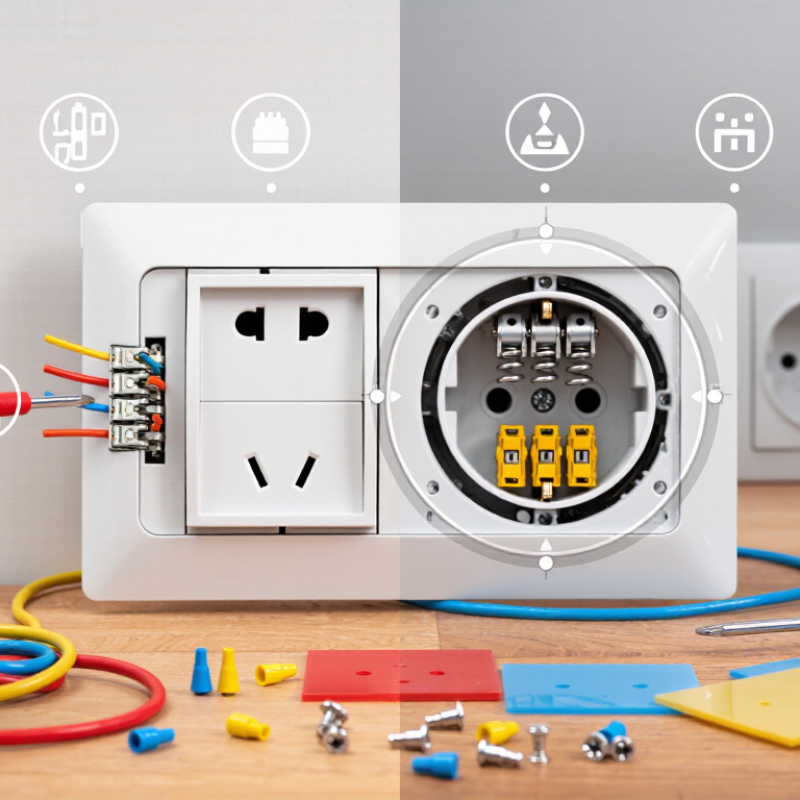
What Is the Best Duplex Outlet for Global Buyers?

Duplex Outlet Basics and Its Role in Global Electrical Systems

What Is the Best Duplex Outlet for Global Buyers?

Duplex Outlet Basics and Its Role in Global Electrical Systems

A duplex outlet contains two receptacles in one wall position. It supports two connected loads while saving installation space. Common designs include grounding contacts, shutters, screw terminals, and tamper-resistant features. However, “best” depends on the electrical system, not appearance. Buyers must match voltage, frequency, current rating, wiring method, and wall-box dimensions. IEC 60884-1 provides widely referenced safety requirements and testing principles for household socket-outlets.

The details matter. A loose plug can create heat at the contact point. A weak terminal may cause intermittent power. During inspection, check firm insertion, clear markings, secure grounding, and stable faceplate alignment. Moisture-resistant versions may suit kitchens, workshops, and sheltered outdoor areas, but they still need correct installation. Small mistakes remain common.

The International Energy Agency’s Electricity 2024 report expects global electricity demand to grow by about 4% annually through 2026. More connected equipment will increase pressure on everyday outlet systems. A duplex outlet should therefore support reliable contact, safe grounding, and practical load management. Buyers should also review local certification requirements, because electrical standards differ between markets. One outlet design may fit several regions poorly. That is an uncomfortable, but useful, limitation.

Key Standards, Voltages, and Plug Compatibility by Market

What Is the Best Duplex Outlet for Global Buyers?

The best duplex outlet depends on the target market, not on appearance alone. A two-receptacle design may look identical, yet its voltage and safety requirements can differ greatly. North American outlets commonly support 120 V and 60 Hz systems, with Type A or Type B plugs. Much of Europe uses 230 V and 50 Hz, with Type C, E, or F compatibility. The United Kingdom generally requires Type G, while Australia and parts of Asia often use Type I. Japan may use 100 V systems with Type A or Type B plugs. These differences affect outlet construction, terminal spacing, grounding, and rated load.

Check more than plug shape. Confirm the local certification, earthing method, shutter design, wire capacity, and installation box dimensions. A plug may fit physically but still create poor grounding or unsafe contact. In wet areas, local rules may require additional protection, such as residual-current protection. Electrical regulations can also change, so current market documentation matters. I have seen product comparisons fail because they treated “universal” as automatically compliant. It is not.

Tips: Match the outlet to the country’s voltage, frequency, plug type, and certification before ordering. Ask for test reports from an accredited laboratory. Confirm whether the duplex outlet supports grounded plugs and local wire sizes. If several markets are involved, use separate market-specific versions. That adds inventory work, but it reduces compatibility surprises. No chart is perfect. Verify with a qualified local electrician before installation.

What Is the Best Duplex Outlet for Global Buyers?

Key standards, voltages, and plug compatibility by market

Market Nominal voltage / frequency Common plug types Relevant outlet standard
United States & Canada 120 V / 60 Hz Type A, Type B NEMA 5-15R commonly used for duplex receptacles
Japan 100 V / 50 or 60 Hz Type A, Type B JIS C 8303
United Kingdom 230 V / 50 Hz Type G BS 1363
Most of Europe 230 V / 50 Hz Type C, Type E, Type F IEC 60884-1 and national implementations
Australia & New Zealand 230 V / 50 Hz Type I AS/NZS 3112
China 220 V / 50 Hz Type A, Type C, Type I GB/T 1002 and GB/T 2099
Brazil 127 or 220 V / 60 Hz Type N NBR 14136

The chart compares common nominal supply voltages, while the table identifies the plug geometry and principal national standard. For a global duplex outlet, select the version that matches the installation market, grounding requirements, shutter or child-protection rules, rated current, and certification requirements. A plug adapter changes physical compatibility but does not convert voltage or frequency.

Safety Features to Compare Before Selecting a Duplex Outlet

Choosing the best duplex outlet for global buyers starts with safety, not appearance. In product evaluations, I have learned that a strong outlet should have clear markings for voltage, current, grounding, and installation limits. These details help purchasers avoid a costly mismatch. Confirm that the design fits the destination’s electrical system. A familiar shape does not guarantee compatibility.

Compare outlets with tamper-resistant shutters, especially for homes, schools, and shared buildings. The shutters should block access when only one opening is pressed. Look closely. A reliable grounding path is equally important. Check the terminal construction, contact pressure, and resistance to loosening. Flame-retardant housing can slow heat damage, but it cannot correct poor wiring. Some models also include overload, leakage, or arc-fault protection. These functions are valuable, yet their availability depends on the local electrical system.

Moisture deserves careful attention. For kitchens, workshops, and outdoor areas, compare the enclosure rating, sealed covers, and corrosion resistance. An outlet made for dry interiors may fail in a humid location. Independent safety testing and traceable certification provide stronger evidence than vague claims. Installation instructions should be readable and complete, with torque guidance and approved wire types. I sometimes focus too heavily on test labels; that is a mistake. Actual fit, secure connections, and a qualified local inspection still matter. Check replacement parts and service information before ordering in volume.

What Is the Best Duplex Outlet for Global Buyers? — Safety Features to Compare Before Selecting a Duplex Outlet
Safety Dimension What to Compare Recommended Selection Criteria Why It Matters for Global Buyers Verification Method
Rated Voltage Voltage printed on the outlet and product documentation. Select a rating equal to or higher than the local supply voltage. Common systems include approximately 100–127 V and 220–240 V. Using an outlet outside its voltage rating can increase insulation stress, overheating, and electric-shock risk. Check the permanent marking, technical datasheet, and destination-country requirements.
Rated Current Maximum continuous current, normally expressed in amperes. Match the outlet rating to the branch circuit, plug configuration, and intended load. Do not treat a higher outlet rating as permission to exceed the circuit rating. Overloading can cause excessive heat at terminals, contacts, or the wiring system. Confirm the amperage marking and compare it with the installation design and applicable standard.
Grounding or Earthing Presence of a protective earth contact and a reliable earth terminal. Prefer a properly grounded duplex outlet for Class I appliances and equipment with exposed conductive parts. A protective earth path helps reduce touch voltage if an insulation fault occurs. Inspect the earth terminal, wiring diagram, continuity test, and certification documentation.
Child-Protection Shutters Automatic shutters covering the live and neutral contacts when no plug is inserted. Choose shutters that open only when the correct plug pins are inserted together. Shutters reduce the risk of accidental contact with energized contact openings, especially in homes and childcare areas. Test the mechanism with an approved test method; do not rely only on marketing descriptions.
Ground-Fault Protection Compatibility with a residual-current device or ground-fault circuit interrupter. Use required RCD/GFCI protection in the circuit or a suitable protective device where local rules require it. It is not a substitute for grounding. It can disconnect power when leakage or an imbalance indicates a possible shock hazard. Verify trip-current and trip-time requirements under the destination electrical code and test the device using its test function.
Contact Protection Contact pressure, terminal design, and resistance to loosening during repeated use. Select corrosion-resistant contacts with secure screw, clamp, or other approved terminals designed for the specified conductor type. Weak or high-resistance connections may create localized heating, arcing, and premature failure. Review endurance-test results, terminal torque requirements, conductor compatibility, and inspection records.
Heat and Flame Resistance Resistance of the housing and internal parts to abnormal heat, ignition, and tracking. Use high-quality insulating materials with documented glow-wire, flammability, or equivalent safety testing where applicable. Heat-resistant materials help limit fire propagation caused by overloads, loose connections, or nearby heat sources. Request material specifications and test reports applicable to the target market.
Mechanical Endurance Ability to withstand repeated plug insertion, withdrawal, impact, and mounting stress. Choose an outlet tested for the expected operating cycle and installation environment. Mechanical wear can reduce contact pressure and compromise grounding or electrical continuity. Compare endurance-cycle data, impact-test results, and mounting instructions.
Ingress Protection Resistance to dust and water, expressed by an IP code when applicable. For dry indoor areas, a standard indoor design may be sufficient. For damp, wet, dusty, or outdoor locations, select a suitable enclosure and cover with the required IP rating. Moisture and foreign particles can cause corrosion, tracking, short circuits, or electric shock. Confirm the IP rating applies to the complete installed assembly, including the cover and cable entry.
Tamper Resistance Protection against insertion of objects into one contact opening. Consider tamper-resistant construction where children or unauthorized users may access the outlet. It adds protection against deliberate or accidental insertion of conductive objects. Check the relevant national standard and verify that the internal shutter design has been tested.
Plug Compatibility Matching of socket geometry, pin arrangement, frequency, voltage, and grounding method. Use the socket configuration approved for the destination market; avoid relying on universal openings for permanent installations unless specifically permitted. Incorrect plug fit can cause poor contact, exposed live parts, overheating, or loss of grounding. Compare the product drawing with the destination plug standard and appliance requirements.
Standards and Certification Conformity with the electrical-product standard used in the destination country or region. Select products supported by current, traceable test reports and valid conformity documentation for the target market. Standards address construction, temperature rise, dielectric strength, endurance, and other safety risks. Check the exact model, rated values, report scope, issue date, and certification mark requirements.
Installation Compatibility Wall-box dimensions, terminal arrangement, conductor size, mounting method, and available space. Confirm that the duplex outlet fits the local wall box and accepts the permitted conductor types and sizes. Improper fit or cramped wiring can damage terminals, reduce insulation clearance, and create heat buildup. Review dimensional drawings, installation instructions, torque values, and local wiring rules.
Clear Markings Permanent identification of line, neutral, earth, voltage, current, and manufacturer traceability information. Prefer clear, durable markings that remain legible after installation and cleaning. Correct identification reduces wiring errors and simplifies inspection, maintenance, and future replacement. Inspect the product body, packaging, datasheet, and installation guide for consistent information.
Selection reminder: The best duplex outlet is the one that matches the destination voltage, current, plug configuration, grounding system, installation environment, and applicable electrical standard. Final installation and protection should be completed by a qualified electrician in accordance with local regulations.

Material, Design, and Installation Factors for International Buyers

What Is the Best Duplex Outlet for Global Buyers?

Material, Design, and Installation Factors for International Buyers

For global buyers, the best duplex outlet is not simply the one with the highest current rating. It must match local voltage, frequency, plug geometry, earthing method, and installation boxes. IEC 60884-1 provides a widely used reference for household plugs and socket-outlets, but national deviations still matter. The International Energy Agency’s Electricity 2024 report forecasts global electricity demand to grow by about 4% in 2024 and 2025. This growth makes heat resistance and secure contact pressure more important in dense residential projects.

Choose flame-retardant thermoplastic for the faceplate and corrosion-resistant copper-alloy contacts. Brass or phosphor bronze can maintain conductivity, but plating quality and spring force need inspection. A shuttered design can reduce accidental contact. Do not confuse a higher ampere label with safer performance. Thermal testing, terminal torque, and repeated insertion tests reveal more. Small installation errors can defeat an excellent product. I would question vague “universal” claims unless test reports identify the applicable standard and market.

Tips: Confirm the destination standard before ordering. Request test reports, drawings, and terminal dimensions. Check whether the box accepts the outlet depth. Use a qualified local electrician for verification. Leave clearance for conductors. That detail is often missed. Record batch information for future maintenance.

How to Choose the Best Duplex Outlet for Your Target Market

Choosing the best duplex outlet for a target market starts with the wall, not the catalog. Map the local voltage, frequency, plug geometry, grounding method, and installation box. IEC 60884-1 provides baseline requirements for household socket-outlets, but national rules may add stricter tests. Verify certification through the importing country’s recognized authority. Do not assume one approval travels everywhere.

The International Energy Agency’s Electricity 2024 report forecasts global electricity demand growth of about 4% in 2024 and 2025. Higher demand does not mean every outlet needs a higher rating. It does require reliable terminals, heat resistance, and stable contact pressure. Check the combined load when two appliances operate together. A neat specification can still miss the installer’s reality. Tight wall boxes, crowded wiring, and weak earthing create practical risks.

The World Bank’s Global Electrification Database reported 91% global electricity access in 2022. That number hides major differences in housing quality and climate. For humid kitchens, consider corrosion resistance and an appropriate IP rating. For family housing, shutter protection and tamper resistance deserve attention. In dusty workshops, recessed contacts and a strong faceplate may matter more than appearance. Review packaging language, wiring diagrams, screw direction, and replacement availability. A universal-looking design may simplify purchasing, but local maintenance teams may find it unfamiliar. Test samples with local electricians before placing a large order.

FAQS

What is a duplex outlet?

A duplex outlet contains two receptacles in one wall position. It supports two connected loads while saving installation space. Small mistakes matter.

How should global buyers choose the best duplex outlet?

Match the outlet with local voltage, frequency, current rating, plug type, wiring, and wall-box dimensions. Appearance alone is unreliable.

Which electrical systems commonly use different outlet designs?

North America commonly uses 120 V and 60 Hz systems. Europe often uses 230 V and 50 Hz. Japan may use 100 V systems.

Why is plug shape not enough for compatibility?

A plug may fit physically but still create weak grounding or unsafe contact. Check earthing, terminal spacing, wire capacity, and local certification.

What safety details should buyers inspect?

Check firm plug insertion, clear markings, secure grounding, and stable faceplate alignment. A loose contact can produce heat.

Are moisture-resistant duplex outlets suitable for wet locations?

They may suit kitchens, workshops, or sheltered outdoor areas. Correct installation remains essential. Extra protection may also be required locally.

Can one duplex outlet design serve several countries?

Sometimes, but not reliably. Different markets require different voltages, plug systems, certifications, and box dimensions. “Universal” does not mean compliant.

What documents should buyers request before ordering?

Request current test reports from an accredited laboratory. Confirm supported wire sizes, grounded-plug compatibility, and market-specific certification. Documentation can still be incomplete.

Why does load management matter for duplex outlets?

More connected equipment increases pressure on everyday outlet systems. Two receptacles do not always mean unlimited safe capacity. Check the rated load carefully.

Conclusion

Choosing the best Duplex Outlet for global buyers requires more than comparing appearance or price. A duplex outlet provides two power connections in one unit, making it useful in homes, offices, hotels, and commercial spaces. However, its suitability depends on the target market’s voltage, frequency, wiring methods, plug shape, grounding requirements, and applicable safety standards. Buyers should confirm compatibility before selecting a product for a specific region.

Safety and construction quality are equally important. Look for features such as reliable grounding, secure terminals, child-protection options, heat-resistant materials, durable contacts, and stable wall mounting. The outlet’s material, color, layout, screw design, and installation method should also match local expectations and professional practices. Ultimately, the best Duplex Outlet is one that combines electrical compatibility, certified safety performance, durable materials, practical design, and straightforward installation for the intended market. Avaliating these factors carefully can help global buyers reduce compatibility risks and choose a dependable solution for different electrical environments.


Henry

Henry

Henry is a dedicated marketing professional with a profound expertise in the company's offerings. With years of experience in the industry, he possesses an impressive understanding of the market dynamics and consumer behaviors that drive success. Henry is committed to sharing his insights through......